Google Maps’ New Know Before You Go and Trending Features: What They Mean for Local Businesses

Google rolled out three notable changes to Google Maps recently: an AI-generated “know before you go” tips section on business listings, a trending section added to the Explore tab, and the option for reviewers to post under a nickname instead of their real name. Each one is a genuinely separate change with a different, specific implication for how local businesses get discovered and represented, and it’s worth understanding them individually rather than as one general product update.
Know before you go: Gemini is now summarizing what your reviews already say
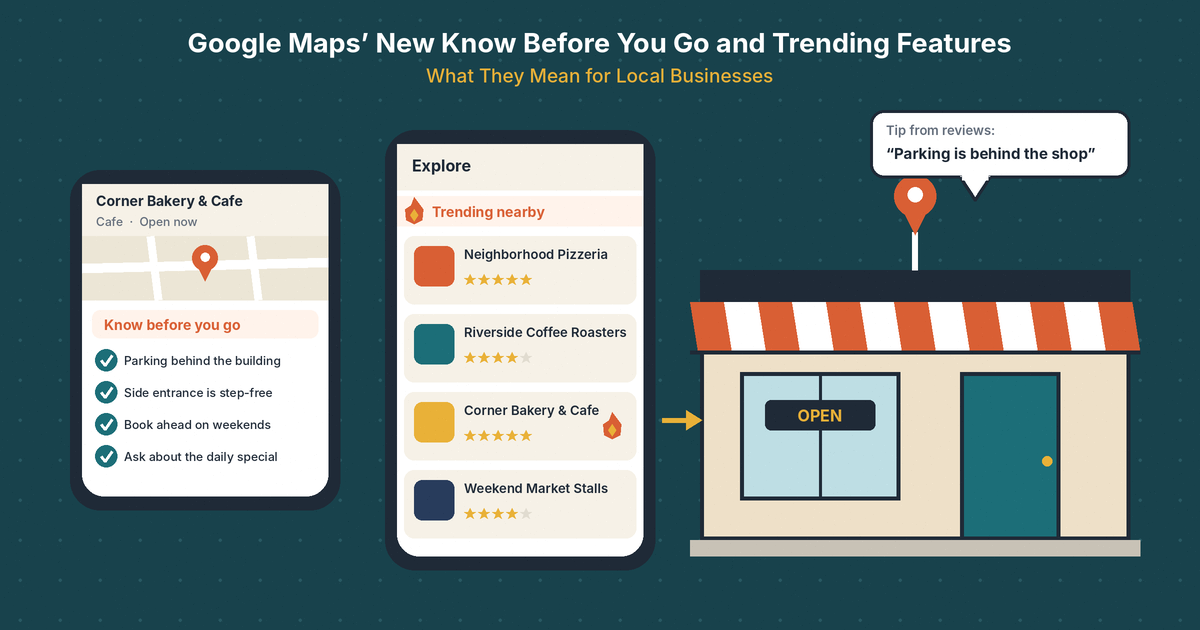
This is the feature with the most direct implication for local businesses. When someone searches for a place in Google Maps, restaurants, hotels, venues, they may now see a new section on the listing surfacing practical, specific tips: how to book a table, whether there’s a secret menu item worth knowing about, parking guidance, details about finding the entrance. Google generates these using its Gemini AI model, drawing on the actual content of customer reviews and other information it can find online about the business.
The practical implication is direct: Google is now actively extracting and surfacing whatever practical, specific detail already exists in your reviews and online presence, whether that detail is flattering, unflattering, outdated, or simply absent. A restaurant with reviews that mention “street parking is nearly impossible, use the garage two blocks over” may find that exact guidance surfaced prominently to every future searcher, which is either genuinely helpful context or a a reputational nudge you didn’t choose to publish yourself, depending on how it reads.
This ties directly into something this content cluster has emphasized before: review content functions as real evidence, not just a sentiment score. This feature makes that truer than ever, since Google is now literally mining review text for specific, actionable detail and presenting it directly to searchers, sometimes ahead of anything the business itself has published.
What to actually check
Search for your own business in Google Maps and see whether a know-before-you-go section appears, and if it does, read exactly what it says. If it’s surfacing outdated or slightly inaccurate practical information, an old booking process, a parking situation that’s since changed, that’s worth correcting through updated Google Business Profile information and, where relevant, encouraging newer reviews that reflect the current situation. If it’s surfacing genuinely useful, accurate detail, there’s an opportunity here too: making sure your own listing and website contain the same accurate practical information reinforces consistency, which matters for the broader entity-trust reasons this cluster has covered elsewhere.
Trending in the Explore tab: discovery is now pulling from more than your own listing
Google also added a trending section to Maps’ Explore tab, surfacing popular nearby restaurants, activities, and sights. This isn’t drawn from Google’s own listing data alone. Google has said these trends are sourced in part from third-party platforms, Viator, Lonely Planet, and OpenTable among them, alongside content from local influencers and creators.
For a local business, particularly in categories like dining, attractions, and experiences, this means a meaningful discovery surface is now influenced by presence and activity on platforms outside Google’s own ecosystem entirely. A restaurant that’s well-represented on OpenTable, or an activity provider well-represented on Viator, has a real, additional path into this specific kind of visibility that a business only focused on its Google Business Profile doesn’t.
What to actually check
For businesses in categories this trending feature is likely to surface, restaurants, activities, attractions specifically, it’s worth auditing whether you have a genuine, active, accurate presence on the relevant third-party platforms Google is explicitly pulling from, not just Google itself. This is a case where the usual advice to consolidate effort around Google Business Profile doesn’t fully apply. A meaningful piece of this specific discovery channel sits outside Google’s own properties.
Reviewer nicknames: a change worth understanding, not overreacting to
Google is now letting reviewers use a nickname and profile photo instead of their real name when posting a review. Google’s own framing is straightforwardly about reviewer privacy and comfort, giving people who’d rather not attach their real identity to a public review the option not to.
The honest, uncertain part of this change, worth naming rather than glossing over, is what it might do to perceived review credibility over time. A named reviewer with a consistent public profile has historically carried a certain implicit accountability that an anonymous or pseudonymous one doesn’t automatically carry. Whether this meaningfully changes review trustworthiness in practice, or simply reflects how a lot of review reading behavior already worked given how little most people scrutinize reviewer identity anyway, isn’t something this early in the rollout to confidently predict either way.
What to actually do about it
There’s no specific action this change requires beyond general awareness. It doesn’t change the practices this content cluster has recommended around review generation and response: encouraging genuine, specific feedback and responding to it thoughtfully remains the right approach regardless of whether a given reviewer’s name attached to it is their real one or a chosen nickname.
Why all three of these reinforce the same underlying theme
Each of these three changes, in a different way, reduces how much control a business has over exactly what gets shown about it and increases how much that representation depends on evidence Google is actively pulling from reviews, third-party platforms, and aggregated online content rather than a business’s own direct claims. This is consistent with the broader direction this content cluster has tracked throughout: visibility increasingly depends on the quality and accuracy of the evidence that exists about a business across the web, not just what a business states about itself on its own profile.
The multi-location angle
For a multi-location business, both the know-before-you-go tips and the trending Explore tab surface information at the individual listing level, which means this needs checking location by location, not once for the brand. One location’s know-before-you-go section might be surfacing genuinely accurate, helpful detail while another location’s, perhaps with fewer or older reviews, shows something outdated or thin, simply because the underlying review evidence differs between the two. Similarly, third-party platform presence, an OpenTable listing, a Viator activity page, needs to exist and stay current for each relevant location individually, not just at a brand or flagship level.
Key Takeaways
- Google Maps now generates “know before you go” tips using Gemini AI, pulling directly from review content and other online information, which means practical detail already sitting in your reviews may now be surfaced prominently whether or not you’ve chosen to publish it yourself.
- The new trending section in the Explore tab draws partly from third-party platforms like Viator, Lonely Planet, and OpenTable, meaning presence on these platforms now has a direct discovery benefit for relevant business categories.
- Reviewer nicknames give reviewers more privacy but introduce a genuine, still-uncertain question about how anonymized reviews affect perceived review credibility over time.
- All three changes reduce direct business control over representation and increase dependence on the accuracy and quality of evidence already existing across reviews and third-party platforms.
- Multi-location businesses need to check know-before-you-go content and third-party platform presence at the individual location level, since the underlying evidence, and therefore what gets surfaced, can vary meaningfully between locations.
Frequently Asked Questions
What is Google Maps’ “know before you go” feature?
It’s a Gemini AI-generated section on business listings in Google Maps that surfaces practical tips, like parking guidance, booking advice, or menu highlights, drawn directly from customer reviews and other information Google finds online about the business.
Can I control what appears in my business’s know-before-you-go section?
Not directly, but you can influence it. Since it draws from review content and online information, keeping your Google Business Profile accurate and encouraging reviews that reflect current, accurate detail affects what this feature is likely to surface.
Where does Google Maps’ trending Explore tab content come from?
Google has said trending recommendations are sourced partly from third-party platforms including Viator, Lonely Planet, and OpenTable, as well as content from local influencers and creators, not exclusively from Google’s own listing data.
Should I be worried about reviewer nicknames making reviews less trustworthy?
It’s a reasonable question without a settled answer yet. The change is new, and whether anonymized reviews meaningfully affect how much readers trust review content isn’t yet clear. It doesn’t change the fundamentals of good review management, encouraging genuine, specific feedback and responding to it thoughtfully.
Do these changes affect every business, or only certain categories?
Know-before-you-go tips appear to apply broadly to places with review content Google can draw from. The trending Explore tab feature is more specifically relevant to restaurants, activities, and attractions, given the third-party platforms it draws from.
How should a multi-location business respond to these changes?
Check know-before-you-go content and relevant third-party platform presence at the individual location level, since the underlying reviews and platform activity that feed these features can vary significantly between locations, even within the same brand.